
Electrical Panel Replacement in Blacksburg: Repair or Replace?
Considering electrical panel replacement in Blacksburg? Here's when a smaller repair makes sense, when replacement is worth a closer look, and what changes the scope.
If you're considering electrical panel replacement in Blacksburg, the first question is whether the problem belongs to one circuit or to the panel itself. A problem limited to one compatible breaker or a circuit connection may call for a smaller repair. Damage within the panel, difficulty finding suitable replacement parts, or a change in the home's electrical needs can make replacement worth discussing. Age alone doesn't settle it. Start with the problem you need solved, then compare the work that actually solves it.
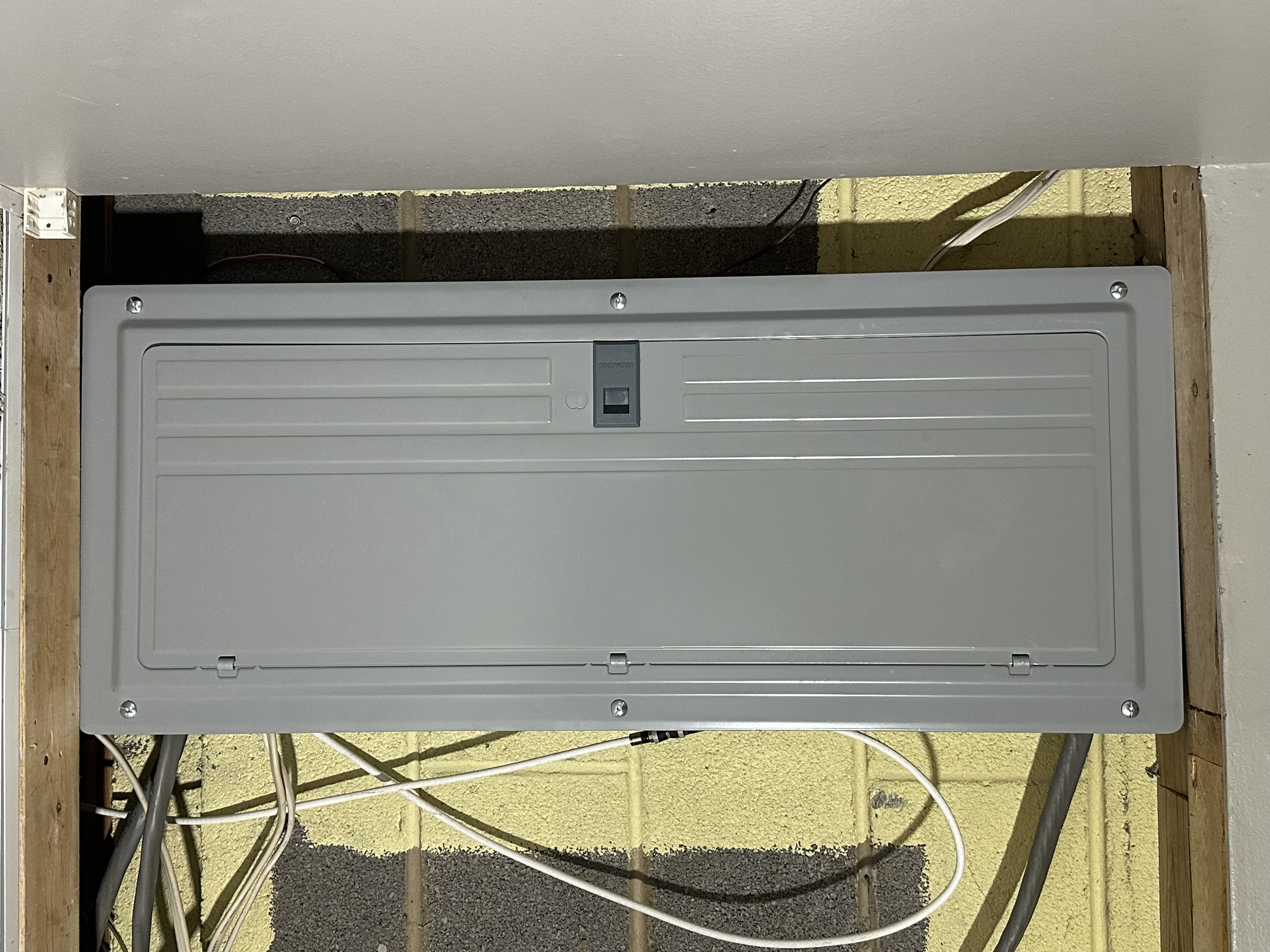
At Wired Right Electric, we changed the service and panel for a Blacksburg customer whose old panel was a safety risk and whose breakers were hard to find. Your home may need something different. The decision starts with the condition of your equipment and what needs fixing.
Start with what you're noticing in the house
Before you ask anyone for a replacement quote, jot down what you've noticed. Does one breaker trip when certain appliances run together? Is the problem limited to one room? Did it start after adding equipment, or has it happened for years? Those details help separate a circuit problem from a broader electrical issue.
A breaker that trips is doing a protective job. The cause could be too much demand on that circuit, a problem with an appliance, or a wiring fault. Replace the panel without finding the cause and the original problem may still be there. Resetting the breaker over and over won't tell you why it trips, either.
You don't need to remove the panel cover to prepare for a visit. Note the affected rooms and equipment, and photograph the outside label if it is accessible. Tell the electrician about heat, unusual smells, noises, visible damage, or moisture near the equipment. Those details help point to what needs attention, though they won't tell you the cause on their own.
When a smaller repair may be the right choice
A smaller repair makes sense when the fault is limited and the equipment around it is in good enough shape to stay. Depending on what's found, that might mean a compatible replacement breaker, correcting a connection, repairing circuit wiring, or addressing a faulty device elsewhere in the house.
Compatibility matters. A breaker that physically fits a space isn't automatically suitable for that panel. The repair needs the correct equipment, and the electrician needs to consider the condition of the parts it connects to. Finding a breaker you can buy is only part of it.
Ask what supports the repair recommendation. Is the panel itself in serviceable condition? Has the circuit problem been identified? Is the proposed repair expected to address that problem, or is more investigation needed? A good explanation ties the work to the problem you're seeing, instead of treating a new part as the answer by itself.
A repair can also be the appropriate first step when a larger project is a separate future preference. Wanting more circuits someday is different from needing to correct a fault today. Keep the two separate in the estimate.
When electrical panel replacement in Blacksburg is worth a closer look
Replacement is worth a serious look when the problem goes beyond a part that can be swapped. Damage to components within the panel, evidence of deterioration, or unsuitable previous alterations can change whether a limited repair is reasonable. That has to be checked properly; you can't judge it from the outside of a closed cover.
Being able to get parts matters too. On our Blacksburg job, the customer had trouble getting breakers for the old panel, and it was a safety risk. We changed the service and panel. If parts are hard to find for your panel, ask whether suitable replacements are available and whether the equipment is in a condition that supports a repair.
Future plans can also affect the decision. If you're adding electrical equipment or changing how rooms are used, the electrician needs to look at how much more power you'll use and what circuits that calls for. An empty breaker space doesn't mean the home's electrical system can handle the addition. A full panel doesn't automatically mean the entire service must be replaced, either.
Panel replacement and service work aren't the same job
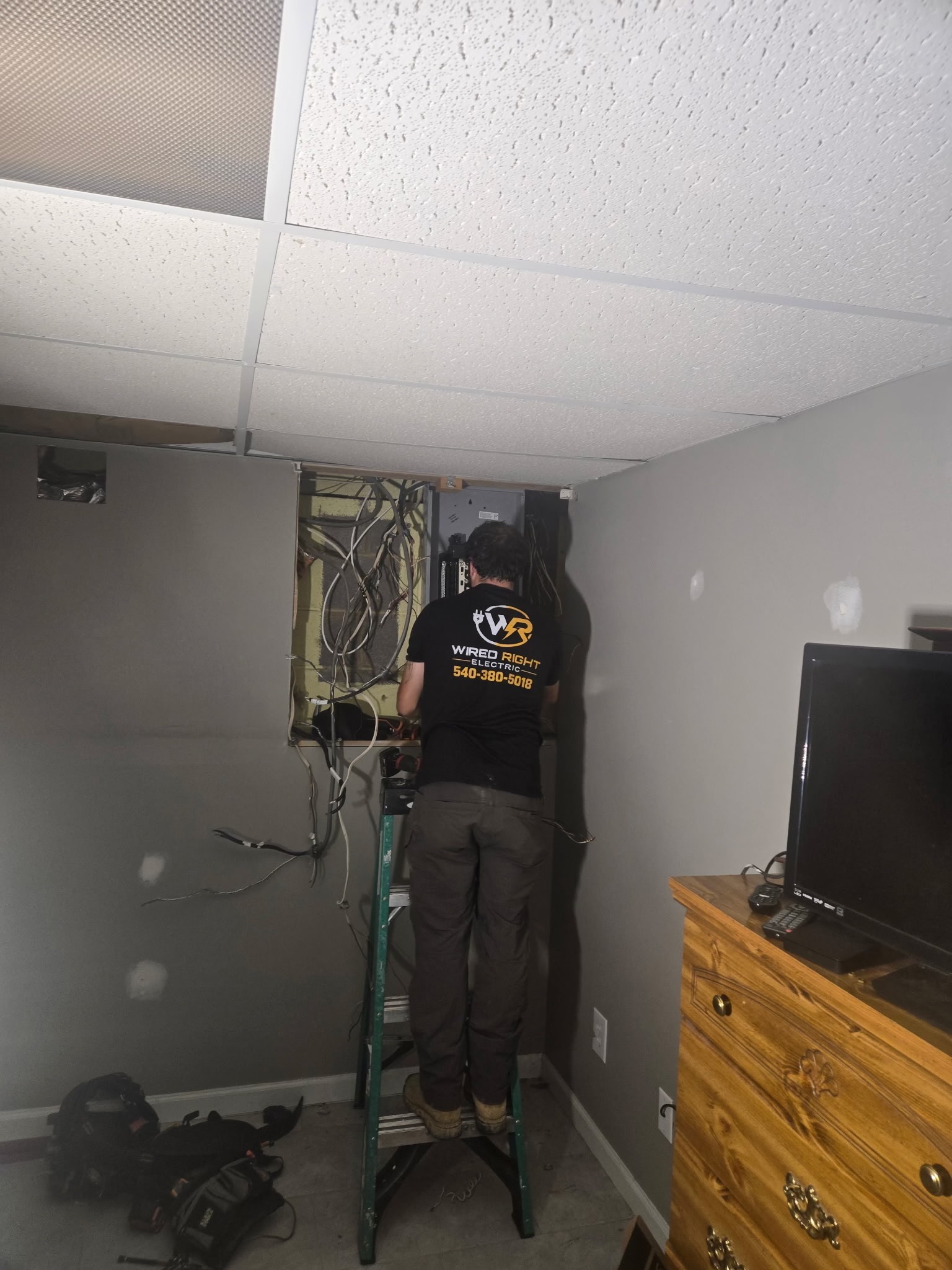
The panel distributes electricity to the home's circuits. The service brings electricity into the home and includes equipment associated with that incoming supply. A project may involve one or both, which is why the words in the estimate matter.
Ask whether the proposal replaces the panel only, includes service equipment, or adds circuits as well. Ask which existing equipment remains. A panel replacement doesn't mean all the wiring throughout the house is new, and a service change doesn't automatically include every improvement you might want inside.
Our Blacksburg project included both service and panel work. Don't assume that same scope applies to your home. If two estimates differ, check that they cover the same work before you compare the totals. One may address a fault while the other includes changes for future equipment.
What changes the cost of repair or replacement?
The biggest factors are how far the problem goes and how much work it takes to reach it and fix it. A limited repair and a replacement involving service equipment are different projects. Equipment condition, suitable parts, access, and changes to existing circuits can all affect the scope.
Where the equipment sits matters too. Finished walls or an awkward spot can mean extra work. If walls need to be opened, ask whether the electrical estimate includes making openings, patching, and painting, or whether some of that belongs to another contractor.
Additional circuit work, changes to grounding and bonding, permit requirements, and utility coordination may also affect the proposal. These aren't automatic extras for every job. Ask which apply to your home and why. A written scope is more useful than a general promise that everything is included.
Permits, inspections, and time without power
Permit and inspection requirements depend on the work and the authority responsible for the property. Repairing a limited fault and changing service equipment can have different requirements. Ask how the proposed work will be checked against the applicable requirements and who is responsible for each step.
An inspection is a review of the permitted work against applicable requirements. It isn't a statement that every part of an older home's electrical system has been replaced or inspected. Clarify the boundary of the project so you know what the review covers.
Service work may require coordination with the utility and an interruption to power. Ask which parts of the house will be affected and what preparation is needed for refrigeration, medical equipment, working from home, or other essential uses. Access, utility arrangements, inspection steps, and findings during the work can affect the sequence. Ask for a plan for your project instead of relying on a general promise about when it'll be done.
Questions to ask before you decide
When we talk about your panel, we'll want to know what you need it to do and what's going wrong. Bring your observations and any plans for additional equipment. Then ask:
- What problem has been identified, and what still needs investigation?
- Can a smaller repair address it while retaining suitable equipment?
- If replacement is recommended, what makes repair a poor option?
- Does the scope include the panel, service equipment, circuit work, or a combination?
- What remains outside the estimate, including repairs to finished surfaces?
- What coordination and power interruption should I prepare for?
The right choice is the work your system's condition and your plans actually call for. If you're in Blacksburg and deciding between a repair and replacement, tell us what you've noticed and what you're planning. That's the best place for us to start.