

Planning a Home Lighting Upgrade: Start with How You Use the Room
Planning a home lighting upgrade? Here's how to weigh fixtures, wafer lights, task lighting, and controls so the room works the way you use it.
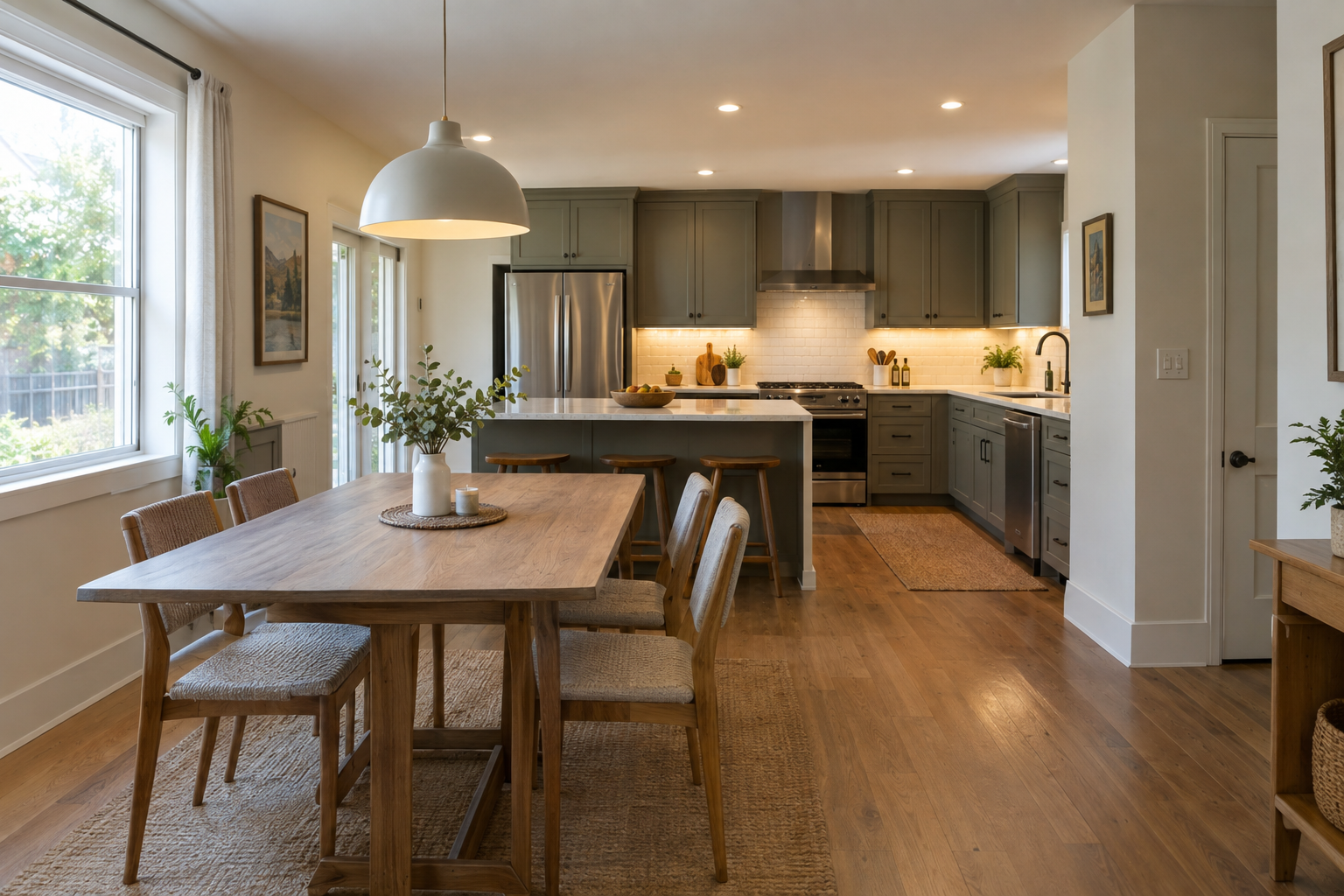
A home lighting upgrade starts with what you want to see and do in the room. If the room is dim overall, you may need better general lighting. If your hands or cabinets cast shadows over a work surface, you may need light closer to the task. If the room feels harsh at night, the answer may involve placement or controls. Adding more ceiling lights is one option, but it isn't the answer to every lighting problem.
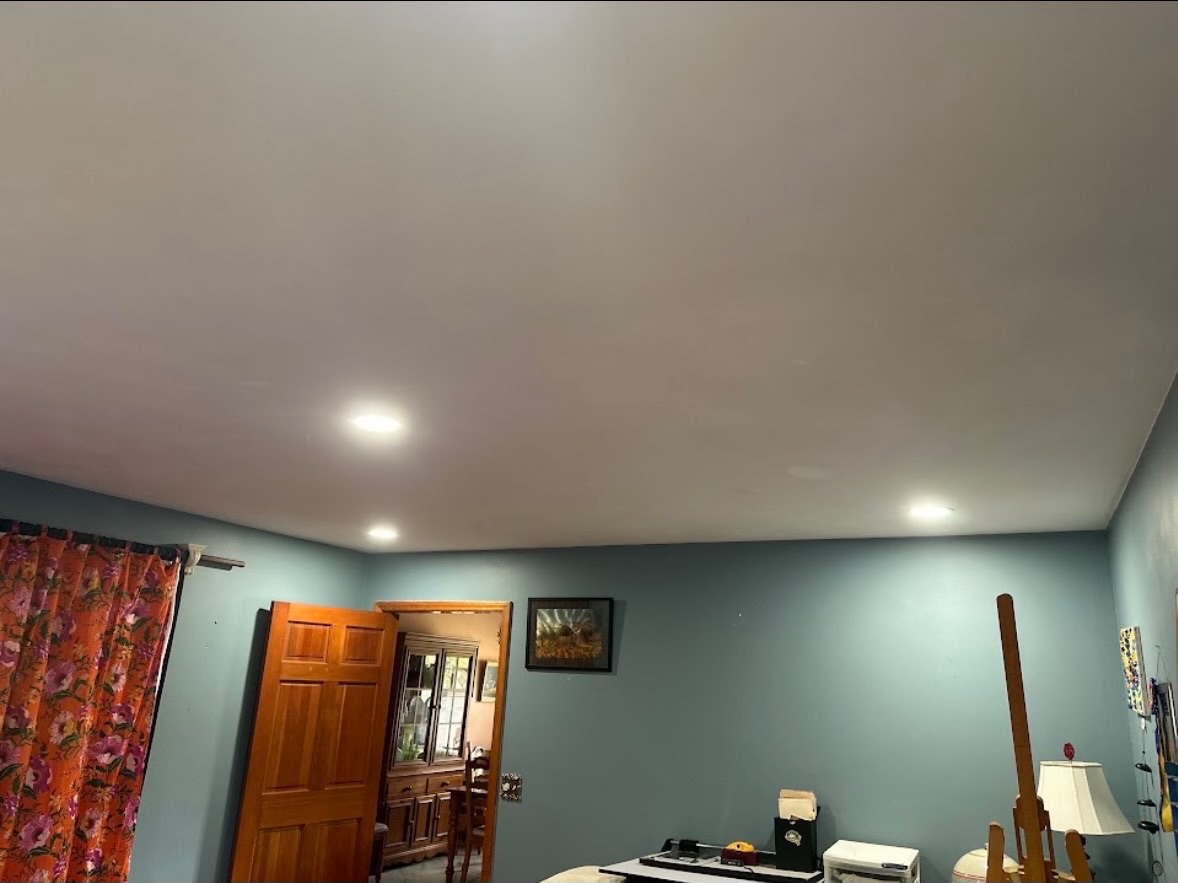
At Wired Right Electric, we installed brand-new wafer lights in a paint room. For your own room, start with how you use it and where the light falls short. That makes it much easier to pick fixtures and decide where they go.
Pin down the problem before you pick fixtures
Start with the spots that frustrate you. Can you read comfortably in your chair? Can you see what you're preparing on the kitchen counter? Is the whole room dark, or is one corner the problem? Notice the room during daylight and after sunset, because windows can disguise a lighting gap until evening.
Furniture and activity matter. A light centered on the room may be poorly placed for a desk against the wall. A ceiling light behind you can leave your work in shadow. Move a table or turn a spare room into an office, and the lighting needs can change even though the room hasn't.
Tell us what should feel different when the job is done. “I want to see the counter without standing in my own shadow” is a useful goal. So is “I want comfortable light for reading without lighting the whole room.” Goals like those help decide where the lights and controls go before anyone cuts into the ceiling.
Decide what each light is for
General lighting helps you move around and use the room as a whole. Task lighting supports a particular activity, such as reading, preparing food, or working at a desk. Accent lighting draws attention to a feature. A room can benefit from more than one type, with separate controls where that is useful.
If an existing fixture is in a good location, changing that fixture may be enough. If a work surface is the main problem, adding task lighting could be more helpful than increasing light throughout the room. New ceiling lights can make sense when the existing arrangement leaves broad areas poorly lit.
There are tradeoffs. Several light sources can give you more flexibility, but they also require a plan for wiring and controls. A single fixture can be simpler, yet it may not serve every activity well. Choose the arrangement around your priorities rather than filling the ceiling with fixtures by default.
Where wafer lights fit in a home lighting upgrade
Wafer lights are slim fixtures that sit close to the ceiling. They can be useful when you want light distributed across a room without a hanging fixture. Their appearance is only part of the decision, though. The space above the ceiling, wiring access, and the requirements of the selected product still matter.
A slim light doesn't mean there is no equipment or wiring to accommodate. The installer needs to check whether the intended location is suitable and how the electrical connections will be made. Obstructions can affect placement, and different ceiling conditions can change which products are appropriate.
Wafer lights are one option to discuss when you want to add ceiling lighting. You may prefer a central fixture, task lighting, new ceiling lights, or a combination. Work out the purpose first, then compare how each option would serve the room and choose the equipment that fits.
Plan placement around shadows and glare
Think about where you stand, sit, and look. A light that shines toward a television or a glossy surface may create distracting reflections. Lighting directly over a walkway may do little for a nearby work surface. A fixture can be attractive and still be in the wrong place for its main job.
Use the furniture layout when discussing positions. Mark where a desk, island, chair, or storage unit will sit. Mention anything likely to move later. This helps distinguish lighting that belongs to the room from lighting intended for one fixed activity.
Evenly spaced dots on a drawing aren't a finished plan. The light's distribution, room surfaces, ceiling conditions, and intended use all affect the result. Ask how the proposed arrangement serves the room. If several placements are possible, discuss the practical differences before choosing one.
Decide how the light should look and feel
Brightness and the appearance of the light are separate choices. One affects how much light you have; the other affects whether it looks warmer or cooler. The right combination depends on the room and your preference. A comfortable evening sitting area and a detailed work area may call for different approaches.
Look at existing lights in adjoining rooms too. A new fixture can feel different beside an older one even when each looks acceptable alone. Paint, finishes, and daylight also affect what you see. If matching matters, bring that up while products are being selected.
For a room used to work with paint or other colors, discuss how accurately colors need to appear. A description such as “bright white” doesn't answer every question about color appearance. Product information and, where practical, comparing options in the room can help narrow the choice. Don't assume the brightest-looking light is the most useful one.
Give the controls as much thought as the fixtures
Decide which lights should operate together. You might want general lighting on one control and task lighting on another, so the room can support different activities. Also think about where you enter and leave. A convenient control position matters every time you use the room.
If you want dimming, choose the lights and controls together. Compatibility affects how they work as a system. Tell us whether the goal is a comfortable evening setting, stronger task lighting, or both. Don't assume an existing dimmer will work properly with any new fixture.
More control isn't automatically better. A complicated arrangement can be frustrating for a room used in a simple way. Choose controls that make the normal routine easy, and discuss whether changing the existing wiring is needed to provide them.
What affects the cost, and how much disruption to expect
Cost depends on more than the number of lights. Replacing a fixture at an existing location is a different scope from adding lights, running wiring, or installing separate controls. The condition of the existing circuit and the needs of the selected equipment can affect the electrical work.
Access above the ceiling can make a difference. A finished floor overhead, concealed obstructions, or limited routes for wiring may require more investigation and openings. Ask where access might be needed, whether the estimate includes surface repairs, and who will handle patching and painting.
Permit and inspection requirements depend on the proposed work and the local authority. Discuss those requirements before installation, along with any circuit changes. Access, material choices, required checks, and conditions found during the job can affect the sequence. Ask about likely disruption and room access without assuming a particular completion time.
What to have ready when we talk
You don't need a finished lighting drawing. Bring pictures of the room, its current fixtures, and the spots where lighting falls short. Explain how you use it, what furniture is staying, and whether other renovation work is planned. Coordinating electrical changes with decorating can avoid making the same area difficult to access twice.
Before agreeing to the work, make sure the proposal identifies fixture locations, selected equipment, controls, electrical changes, and the treatment of any openings. Ask what is included and what another contractor may need to finish. If you're choosing between options, compare how each addresses your original problem.
Tell us what isn't working with your lighting and how you'd like to use the room. That's where we'll start. A good home lighting upgrade gives every light a job and puts the controls where you'll actually use them.